
July 3, 2026

Four B2B social content examples—exec LinkedIn, employee voices, a branded newsletter, and a carousel—and why each one works.


This article is part of a series in which we round up great examples of classic types of content. You can go deeper with our examples of case studies, B2B thought leadership, content strategies, pillar pages, B2B design, and benchmark reports.
B2B social content got a lot more gnarly this year, and we’re all feeling it.
Our feeds are saturated with AI-generated posts—the recycled "thought leadership," the engagement bait, the "here’s the quiet truth" nothing-burger—and audiences have become sharper at spotting the difference between a person and a prompt. LinkedIn spent 2026 actively cracking down on the slop.
What gets attention now is a real person with real conviction and actual skin in the game. B2B buyers increasingly say they trust peer voices and independent experts over brand-produced content, and on LinkedIn, personal profiles pull several times the reach and engagement of company pages (organic reach for brand pages is down more than 60% from 2024). Posting in the polished corporate voice, from the company handle, is a dud strategy.
At the same time as social content has gotten harder, it’s also gotten more important. As AI Overviews absorb more of the results page and roughly two-thirds of Google searches now end without a click, fewer buyers are following blue links to your site at all. More and more of your buyers are forming opinions inside their feeds well before they’d ever reach a landing page.
If that’s where the attention is pooling, that’s where a real chunk of content investment has to go.
Here are four social content formats that we’ve seen work in the zero-click world we’re living in, and our analysis of how to get them right.
Executive-led thought leadership, where a company’s leader posts in their own name and their own voice, is one of the most reliable ways for a B2B company to show up on social. We’re seeing it as one of the most common strategies leveraged by B2B content teams right now.
But anyone who’s ever tried to get a busy, grumpy, non-digital native CEO excited about posting on LinkedIn knows the challenges of making exec-led thought leadership into a reality. I can speak to the challenges of exec-led content personally, not only because at Campfire we run social strategy for the C-suite of B2B SaaS’s biggest names, but also because I’m the original grumpy non-digital exec myself.
Executive thought leadership is one of our biggest service lines, so I have to be out there giving smokin hot takes on LinkedIn. Otherwise, we’d lose credibility with our clients and prospects.
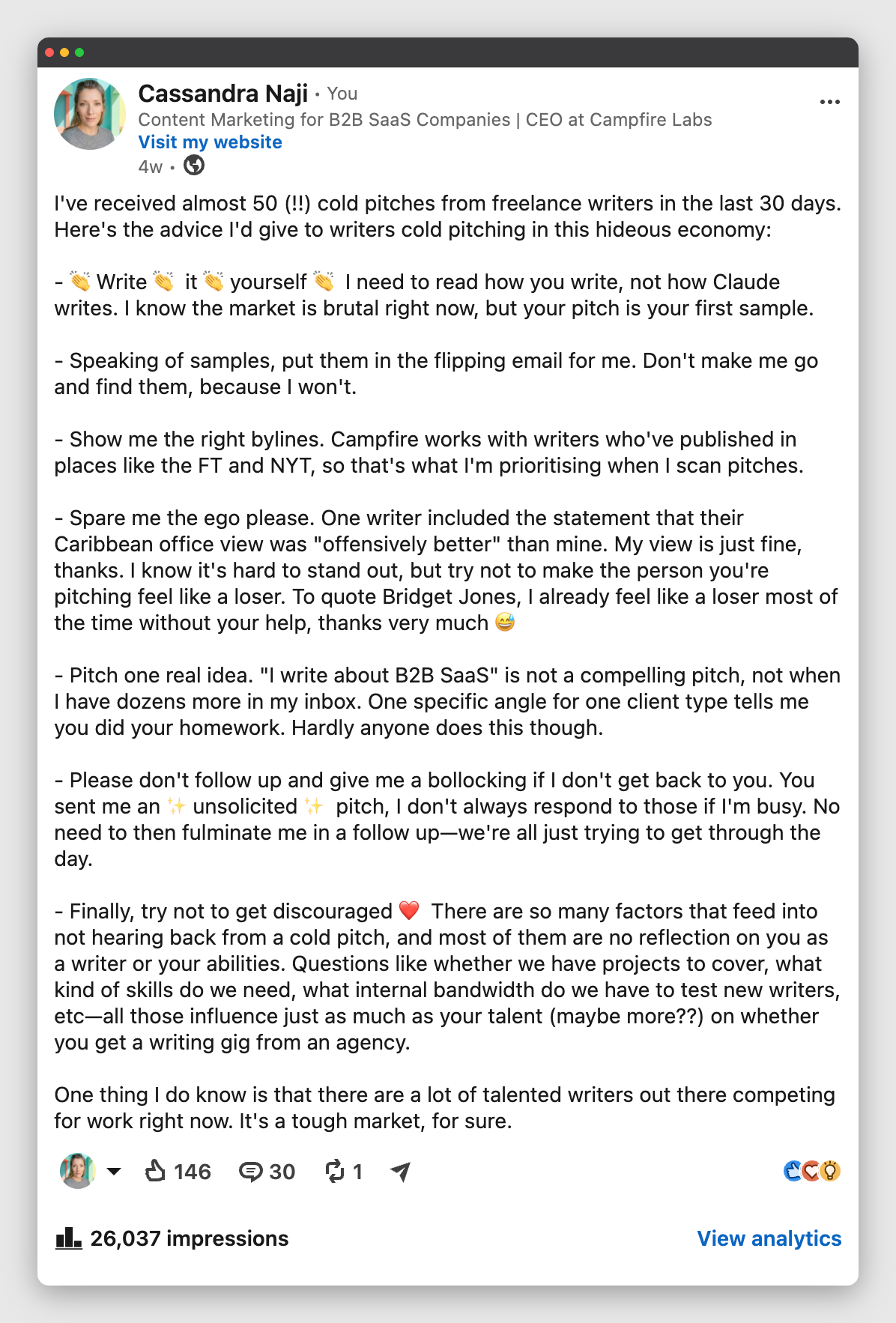
Problem is, I used to hate it. Post a selfie of me in a loud blazer dropping business bombshells? Reader, I’d rather die.
That’s why the Campfire Labs team coached me into posting regular, results-driven LinkedIn content by setting me three goals:
The results followed the behavior: 1,666% year-over-year engagement growth, 200% impression growth, and 26% follower growth.

Executive thought leadership only compounds when the executive sounds like themselves. The instinct is to sand a leader’s posts into something polished and safe, which is exactly what makes them invisible. Permit execs to have an opinion, to be a little weird, to make showing up the win.
Oyster, the global employment platform, turned their own team into their distribution.
Instead of routing everything through the company handle, they looked at who on their team already matched their ideal customer—global People and HR leaders—and backed those people as individual voices on LinkedIn. The brand steps back; the human steps forward.
You can see why it works in the posts themselves. One reframes a C-suite objection: "Let’s hire in [country] because salaries are low" becomes a three-part argument for why a race to the bottom on pay actually costs you (talent scarcity, quick churn, the case for market-aligned offers).
.png)
Another is a straight-up pet-peeve rant (our favourite kind of social post): a People director venting about companies that write work policy "for the lowest common denominator," landing on "if you write policies for the worst 5%, you’ll lose the best 95%." Both cleared 300+ reactions and dozens of comments.
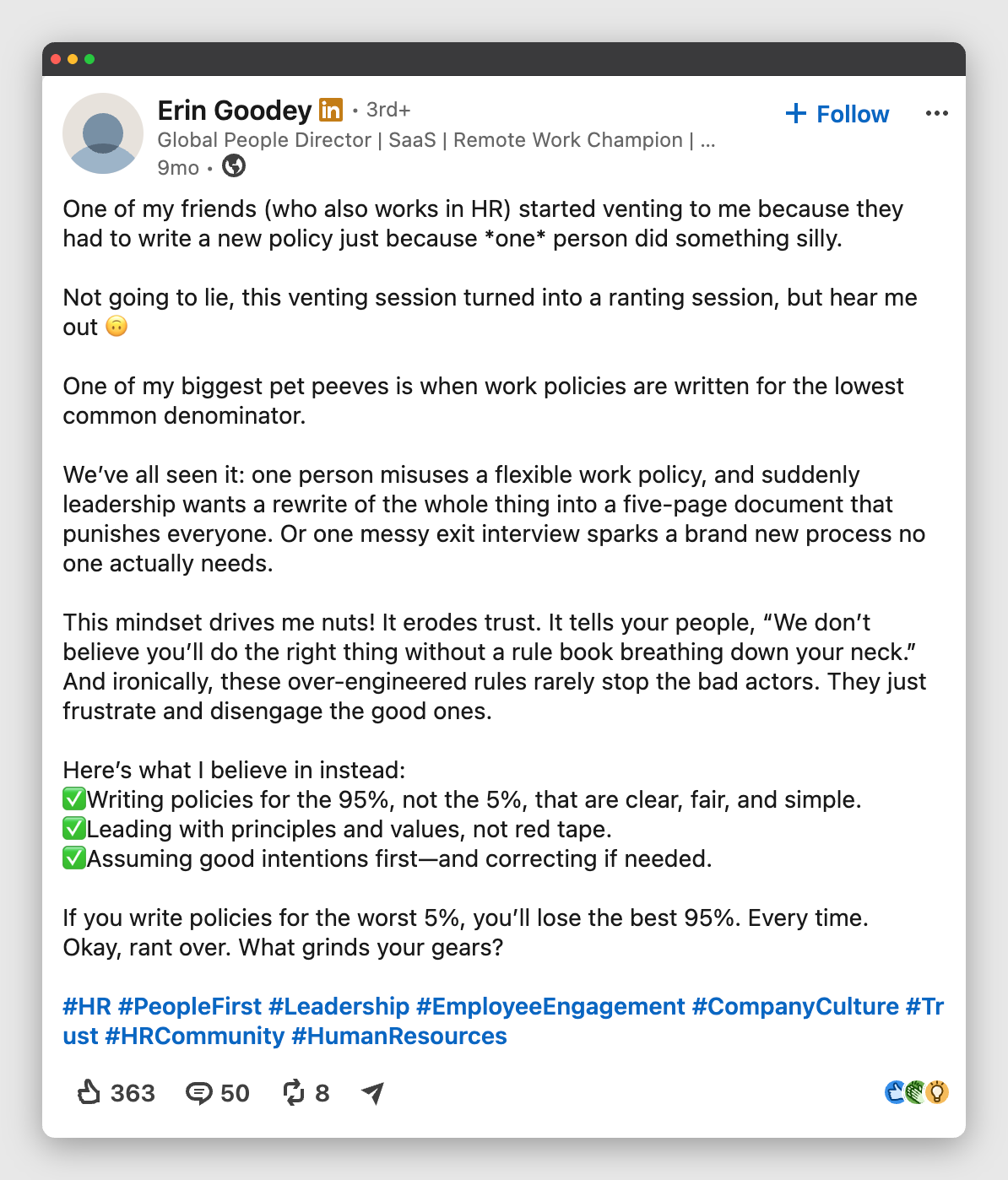
Practitioners trust practitioners. A People director ranting about over-engineered policy reads as real in a way a brand account never can, because it is real—it’s a person with a job describing a thing that annoys them.
The distribution math is favorable too: the people posting have networks full of exactly the buyers Oyster wants, and those networks would never follow a corporate page. The job here isn’t reach for its own sake. It’s borrowing the credibility of individual operators the audience already trusts.
Book a call with our CEO to talk through how social content fits into your broader content strategy.
Most brands post into the feed, get their handful of impressions, and start from zero the next morning. Every post is a fresh roll of the algorithmic dice, which is one of the things that makes social content creation exhausting.
Netradyne has solved that problem through social content aggregation. Their LinkedIn newsletter, Fleet Signal, is a recurring, subscribable publication with a name, a beat, and a subscriber list that gets notified every time a new issue drops. The individual posts still live in the feed, but they also belong to something larger that readers can opt into and come back to.
.png)
For a company like Netradyne, this is the right container for the material. They sit on an enormous, unglamorous subject (fleet management) and a genuine mountain of proprietary driving data. A newsletter gives that data a cadence and a home, and it slowly builds the "these are the people who own this conversation" position that a scattered posting habit never will.
It also converts borrowed audience into owned audience. Followers are subject to the whims of the feed; subscribers get pinged directly. In a channel where reach can evaporate overnight, that’s a meaningful hedge. The job of this format is to compound authority issue after issue. If your organization has a real informational advantage and the discipline to publish regularly, the branded newsletter turns that consistency into an asset you own.
Find out whether your product data can be leveraged into top-tier content with our six-question audit.
A carousel is a swipeable stack of image slides—on Instagram or LinkedIn—where each frame carries a single idea, and the format only rewards you if people keep tapping to the next one. That mechanic makes carousels ideal for a before-and-after or a short visual story, and unforgiving for anything that tries to cram a paragraph onto every slide.
Elephant Energy, a company selling home heat pumps, used one to solve a problem a lot of technical companies share: how do you make an engineering-heavy product feel aspirational?
Our answer was to borrow the visual language of lifestyle media—the kind of clean, art-directed spread you’d find in an architecture or design magazine—and back it with hard numbers.
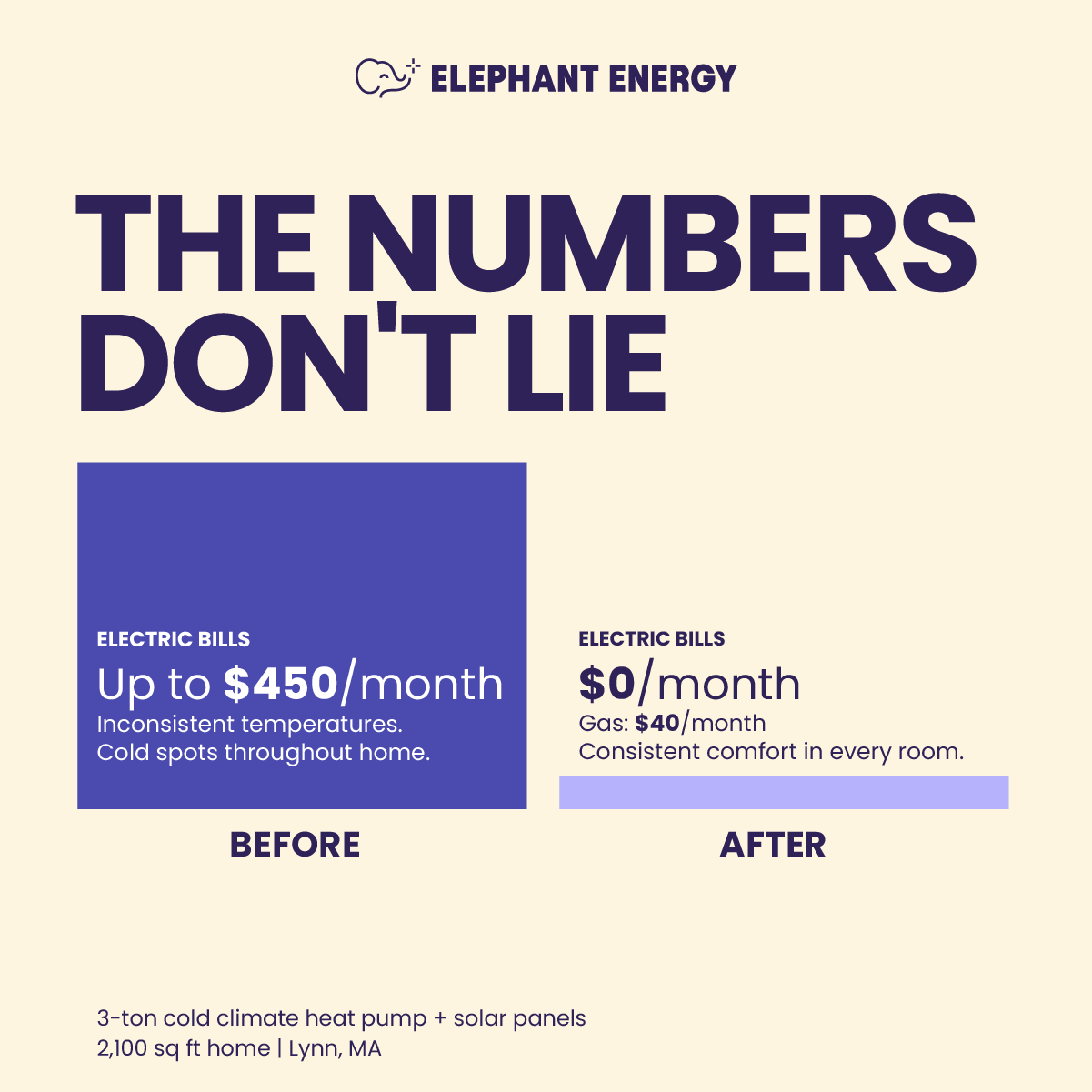
Four slides, one idea each:
The design is genuinely high-quality, with considered typography, a confident color palette, photography that would sit comfortably in a shelter magazine, and that polish is the point. It frames a heat pump as a design object and a lifestyle upgrade rather than a piece of HVAC equipment.
But the aspiration is underwritten by data: the $450-to-$0 swing keeps the piece grounded instead of floating off into pure mood. To make a carousel land like this one, have only one idea per slide, create a first frame strong enough to earn the second tap, include real specifics instead of stock claims, and include a single clear ask at the end.
The old distribution playbook (publish to the site, rank on Google, let the company page reshare the link) is losing relevance as search sends fewer clicks and brand accounts lose reach. Attention has relocated into feeds, newsletters, and AI answers, and is increasingly gathering around people rather than logos.
Each of these social content examples is a bet on that new map. An executive posting in their own voice, a set of employees who match the ICP, a subscribable newsletter, a design-led carousel: they land because a real human is visibly behind them, and because they meet buyers in the places those buyers now actually spend their attention.
None of this means walking away from your blog or your SEO. It means treating social as a primary distribution channel in its own right, rather than an afterthought that reshares whatever the website published.
A concrete place to start: find the one person at your company whose expertise your buyers would genuinely want to hear from, and help them publish something this week that only they could have written.
If you want a partner to help build social content that meets your buyers where they now are, reach out to the team at Campfire Labs.
Subscribe to our newsletters for insights, ideas, and perspectives from the brightest minds in marketing, delivered straight to your inbox.
