

March 10, 2026

YouTube is one of the #1 factors for AI brand visibility... but most content teams haven't started building there yet.

You know the feeling: Your team has built a functioning blog, your newsletter is hitting the inbox, and your SEO is humming along. Then someone drops the question: “Should we be doing more on YouTube?”
Your heart sinks a little. You’ve recorded a few talking-head videos. You’ve repurposed webinars. But the idea of running a full-fledged video presence seems like an entirely new frontier for an already stretched-thin content operation.
“Should we be doing more on YouTube?” sounds tactical, but it’s really multiple strategic decisions bundled into one. Yes, formats and cadences are important. But the leaders getting real leverage from video prioritize strategy. The questions they’re thinking of sound more like:
What do we want to be known for?
Who is the right person to say it?
What system keeps these conversations circulating?
Until you answer those questions, no camera or software subscription will drive the results you’re looking for.
Rachel Downey, Founder of award-winning podcast agency (and Campfire Labs partner) Share Your Genius, puts it bluntly: “Media is the way, not the outcome.” In other words, producing media isn’t the achievement; it’s just the mechanism. The real outcome is authority, reach, and influence in the right circles.
That distinction exposes a deeper issue: almost every B2B content team has a content strategy, but not a media strategy.
“I see stuff on LinkedIn all the time where someone says, ‘I got approved for a $200 Riverside subscription. I'm ready to go.’ And I just think, ‘Good luck to you.’ They're not thinking about a media strategy that puts your brand in front of the right people, gets them to trust you, and establishes you as a go-to source.”
Often, content thinking treats the act of creation as the milestone. But media thinking recognizes that it’s just the starting line. Without intentional positioning and distribution, a YouTube upload is just another asset sitting on a channel, waiting hopefully for an algorithm to notice it. “That's going to do nothing for your company from a media strategy perspective,” says Rachel.
Then there’s AI.
Ahrefs’ analysis of 75,000 brands across ChatGPT, Google AI Mode, and AI Overviews shows that YouTube presence is now the single strongest correlating factor for a brand appearing in AI-generated answers. Meanwhile, Gartner projects a 25% drop in traditional search traffic by 2026 due to AI answering queries directly.
For content leaders who built their strategy on blog SEO, this poses a huge threat to brand discovery. The channel you’ve relied on is contracting, while the channel that now matters most for AI visibility in its replacement is one you haven’t yet built.
Campfire Labs works with Share Your Genius to deliver video and media strategy that’s purposeful, sustainable, and AI-visible. Reach out today to get started.
Before diving into YouTube Studio, choose your lane. Most video content strategies revolve around one of these two goals:
Rachel suggests the first approach for budget-conscious teams. “For a lean team, I would simply ask, ‘What’s a realistic media strategy for our brand that allows people to see the personality behind what we're doing and make sure we're creating rich content that we want to be found for?’”
She’s anchoring the tactic to the goal. So before you decide on cadence, formats, or production budgets, clarify what role video should play in your business.
Are you trying to be easier to find and trust? Or growing an owned audience? Or, are you trying to reduce friction in the buyer and customer journey?
That third question is where this gets interesting.
What if video could reduce friction across the buyer and customer journey?
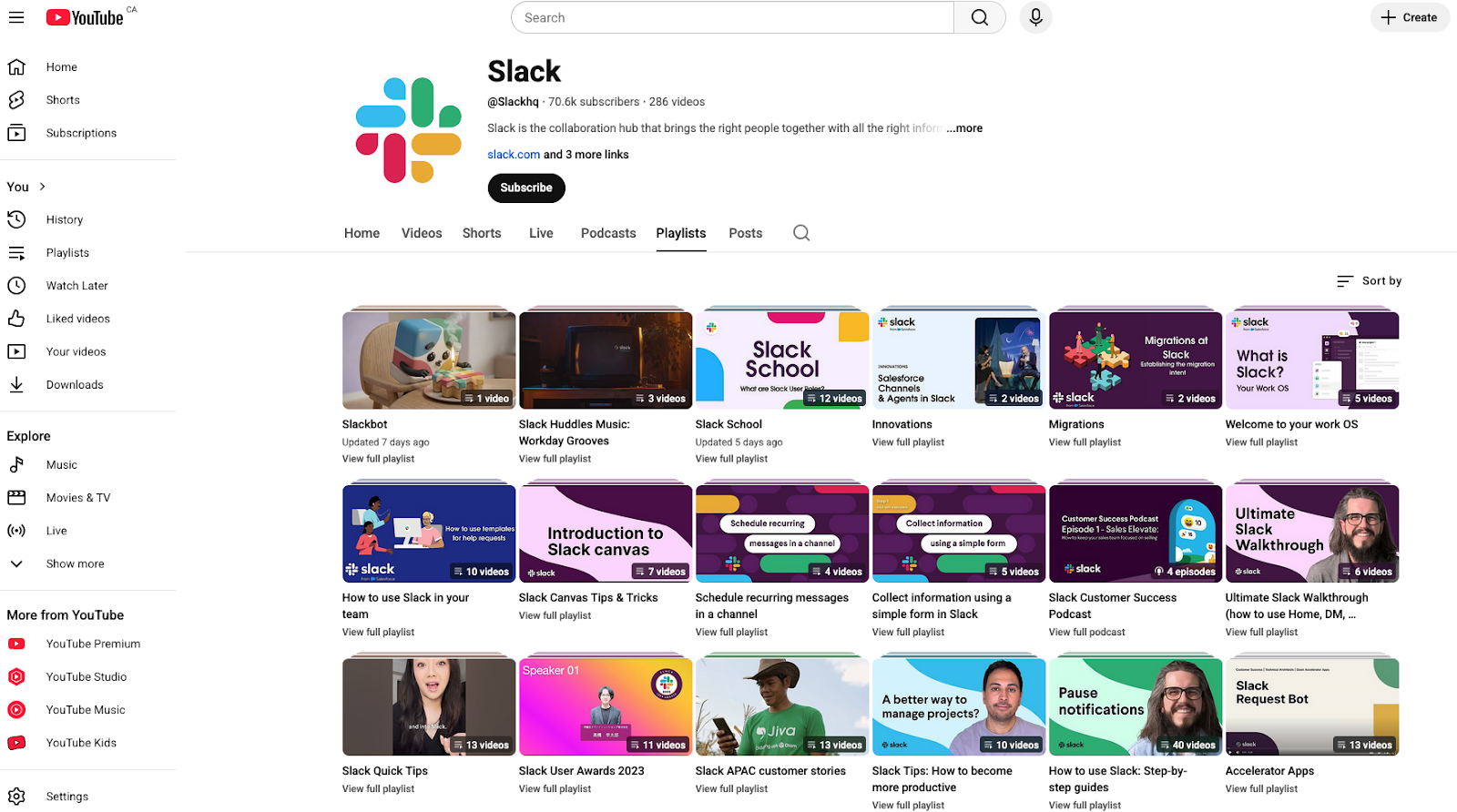
For product-led growth (PLG) organizations, this is especially powerful because buyers often evaluate the product without ever talking to Sales. Imagine a video library that can help with both pre-sale research and post-sale support by explaining product workflows, demonstrating different use cases, reducing onboarding friction, and deflecting support tickets.
That’s exactly what Slack does with its YouTube page. The videos aren’t just marketing assets; they function as scalable self-serve infrastructure. If you look closely at their playlists, you’ll notice they have topics like how to use Slack for different teams, security tips, and specific feature walkthroughs:
Even in sales-led organizations, video can standardize messaging before a live demo, shorten sales cycles by addressing objections asynchronously, and support onboarding after the customer signs the contract.
Each video goal demands a different cadence, a different level of investment, and different success metrics. If you don’t start with a clear objective, you'll exhaust your team chasing signals that don’t align with the impact you want.
Before you start creating dozens of videos, identify your “anchor” content: the long-form, always-on pieces that form the foundation of your media strategy. As the name implies, anchor content grounds your channel and gives it consistency.
“Start with one flagship thing that becomes your primary source,” says Rachel. “If you start with long-form and do it with intention, you can then pull pieces out of it to ‘feed the beast’ between long-form releases.”
Commit to a repeatable, durable format that your audience can return to again and again, whether that’s a product update series or an ongoing educational track. One of the biggest advantages of long-form content is that it gives you room to teach, interview, and explore ideas in depth while incorporating your product organically. That's much harder to do in a 20-second one-off reel.
Figma’s YouTube channel is a prime example. It houses hundreds of long-form videos that all ladder up to the same goal: make the channel the definitive resource for modern product design.
The key is the structure. Figma has meticulously organized the playlists to make it easy to navigate to a topic of interest without having to scroll through a chronological feed. New users can start at square one. Power users can jump straight to advanced workflows. Leaders can explore strategy content.
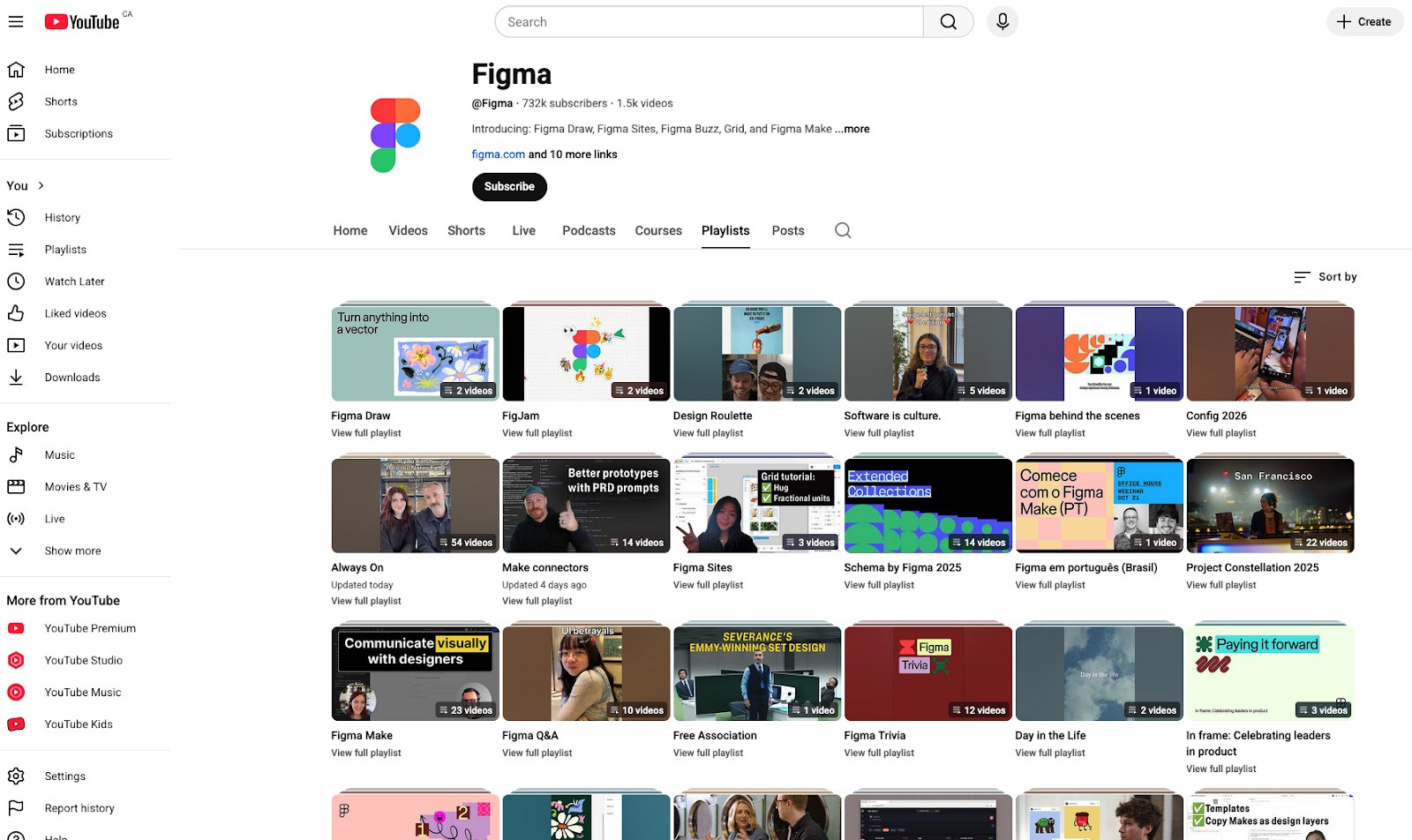
But this is only possible because Figma has a substantial library of long-form anchor content to begin with. That volume is what helps you learn what works, iterate, and build a system that drives discoverability over time.
“By feeding the beast, you figure out what that beast likes. You get more opportunities. You create more at-bats for yourself. YouTube’s designed to help you know what content’s resonating,” says Rachel.
Pro-tip: Get the most out of your content by repurposing it. 73% of B2B decision-makers prefer videos under 60 seconds on mobile, and LinkedIn clips under 30 seconds earn 38% higher completion rates. Not only is long-form content great for your YouTube channel, it’s also the gift that keeps on giving because you can turn it into shorter clips for channels that prioritize shareable bite-sized content like LinkedIn and Instagram.
Another example is Riverside. As an online recording studio platform for podcasters and content creators, their own channel showcases how to do video content right (while highlighting the product’s many benefits, of course).
Riverside’s playlists aren’t as exhaustive as Figma’s, but still cover all the major topics their audience would be interested in. Their long-form tutorials and walkthroughs address their audience’s core jobs-to-be-done like hosting webinars and launching podcasts. Their entire YouTube page is essentially a library of content that advances the Riverside brand and/or highlights the product in an educational way. Every piece feeds the ecosystem.
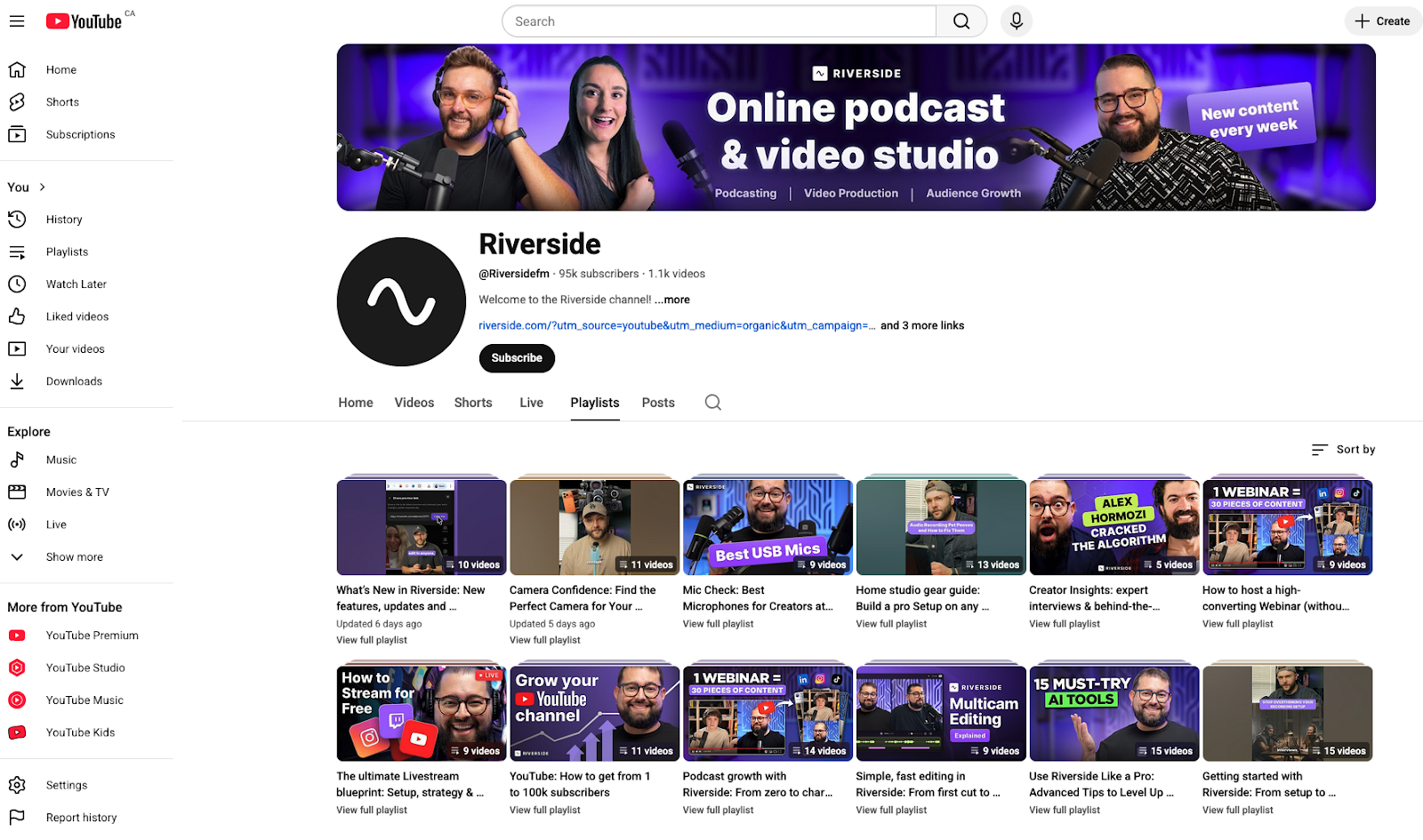
Even though these companies operate in different industries and have vastly different resources, both show how you can achieve the same strategic goal at any scale.
At this point, many teams freeze, thinking they need a studio, a budget, or a six-month content calendar. And somewhere in that spiral, momentum dies.
You don’t need all of that right now. You just need a point of view.
There are only three simple prerequisites to start winning with video:
“Once you’re clear on those three things, you’ve defined your theory of victory,” says Rachel. “It’s the same principle behind great content: lead with value.”
Creating then becomes a way to quickly test that hypothesis, gather feedback, and refine your system. “The sooner you create, the more quickly you'll improve because you'll actually have data to support where you go next.”
So instead of building out a 10-step framework, answer one question:
What’s your theory of victory?
Want to create a video and media strategy that’s purposeful, sustainable, and AI-visible? Reach out today to get started.
Subscribe to our newsletters for insights, ideas, and perspectives from the brightest minds in marketing, delivered straight to your inbox.
